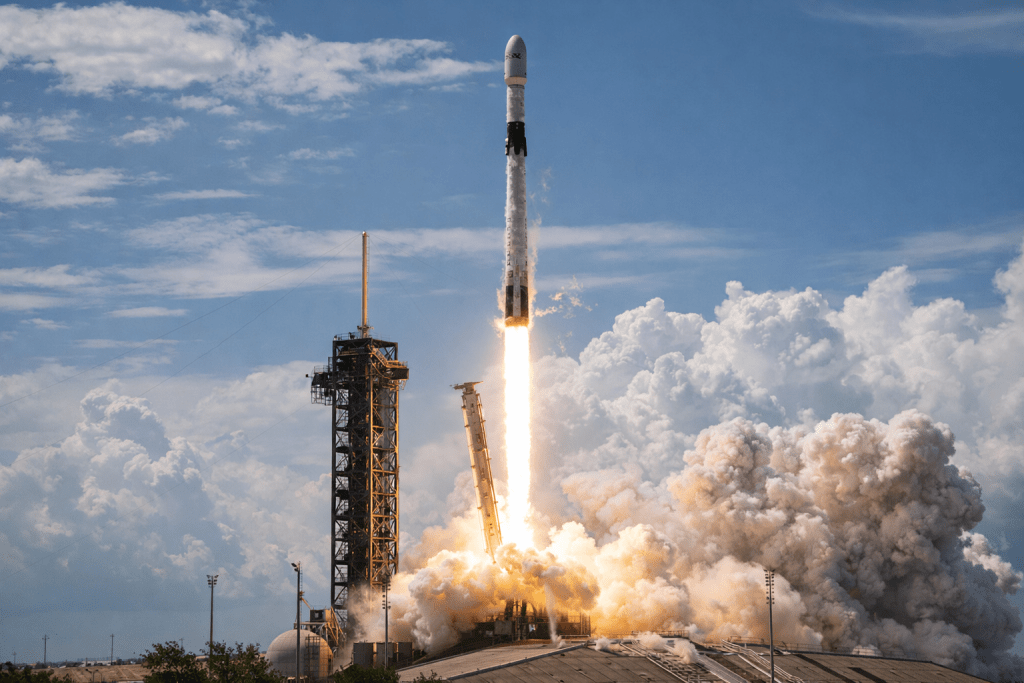
Elon Musk’s SpaceX has secured a $20 billion bridge loan to refinance a large portion of its existing debt ahead of its planned US initial public offering, according to a regulatory filing reviewed by Reuters.
The stopgap financing, arranged last month, replaces five existing debt facilities and gives the company greater flexibility as it prepares for what could be the largest stock market debut on record.
The filing shows that the loan may need to be repaid using IPO proceeds within six months of the offering if it is not cleared earlier through other funding sources.
The bridge loan runs for 18 months and includes two options to extend by three months each.
It replaces two term loans linked to Musk’s X social media platform and three borrowings tied to xAI, his artificial intelligence business.
The refinancing reduced SpaceX’s total debt to $20.07 billion as of March 2, from $22.05 billion at the end of 2024.
Debt reset before market debut
The financing offers a clearer view of how SpaceX is reshaping its balance sheet ahead of going public.
Bridge loans are typically short-term tools used to replace existing borrowings before longer-dated financing or equity proceeds become available.
In this case, the transaction appears designed to simplify SpaceX’s debt structure while preserving room for future issuance after the IPO.
Wei Xie, research director of global auto and future mobility at GlobalData, said the refinancing should help SpaceX reduce leverage further after listing while keeping open more options for longer-term debt issuance.
The names of the lenders were not disclosed in the filing.
IPO plans gather pace
SpaceX confidentially filed for a US IPO on March 31, setting the stage for a public listing expected this summer.
The company is targeting a valuation of about $1.75 trillion, a level that would make it the biggest IPO in history and place it ahead of the largest technology flotations to date.
SpaceX’s confidential filing would be followed by a public prospectus at least 15 days before its investor roadshow, in line with SEC rules.
The listing is expected to offer investors rare access to one of Musk’s most closely watched businesses, spanning launch services, Starlink’s satellite internet operations and a wider push into artificial intelligence.
SpaceX as a space and AI conglomerate, reflecting both its core rocket operations and its growing investment in AI infrastructure.
Investor focus on governance and leverage
The refinancing comes as investors scrutinise how much control Musk will retain after the listing and how aggressively SpaceX intends to fund expansion.
The company plans to maintain controlled company status after the IPO, allowing Musk and a small group of insiders to keep voting control through a super-voting share structure.
That governance model, combined with the scale of the new financing, is likely to keep attention fixed on the company’s capital structure as the flotation approaches.
For potential investors, the bridge loan is more than a housekeeping exercise.
It is an early signal of how SpaceX plans to manage leverage, refinance legacy borrowings and position itself for life in the public markets.
The post Why SpaceX secured a $20B bridge loan ahead of its IPO appeared first on Invezz



More Stories
Can gold hold $4,700 as oil surge reshapes rate cut expectations?
Hang Seng slips as Asian markets weigh oil surge, Hormuz tensions
Trump to host top $TRUMP memecoin holders at Mar-a-Lago luncheon