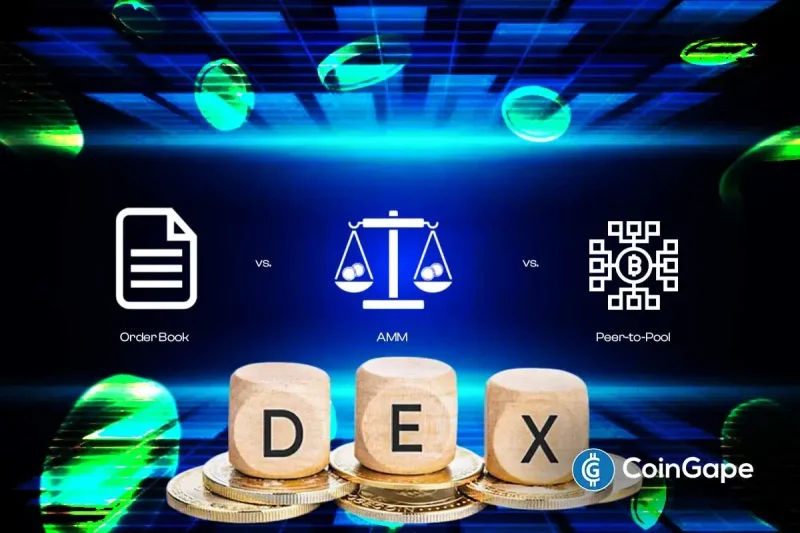
As crypto investors shift to non-custodial trading platforms, decentralized exchanges continually experiment with new methods to manage trades and enhance security, user experience, and cost efficiency. The primary liquidity models are strategies used by decentralized exchanges to handle users’ trade requests and execute asset swaps efficiently. How a Dex manages liquidity and handles trade requests
The post Order Book vs. AMM vs. Peer-to-Pool – DEX Models Explained appeared first on CoinGape.



More Stories
Chainlink Price Prediction: Why $20 is Next Key Target
Why Meme Culture Is Evolving and Shifting Toward Purpose, Consciousness, and Culture
Solana Price Targets $200 Amid Increased Whale Accumulation