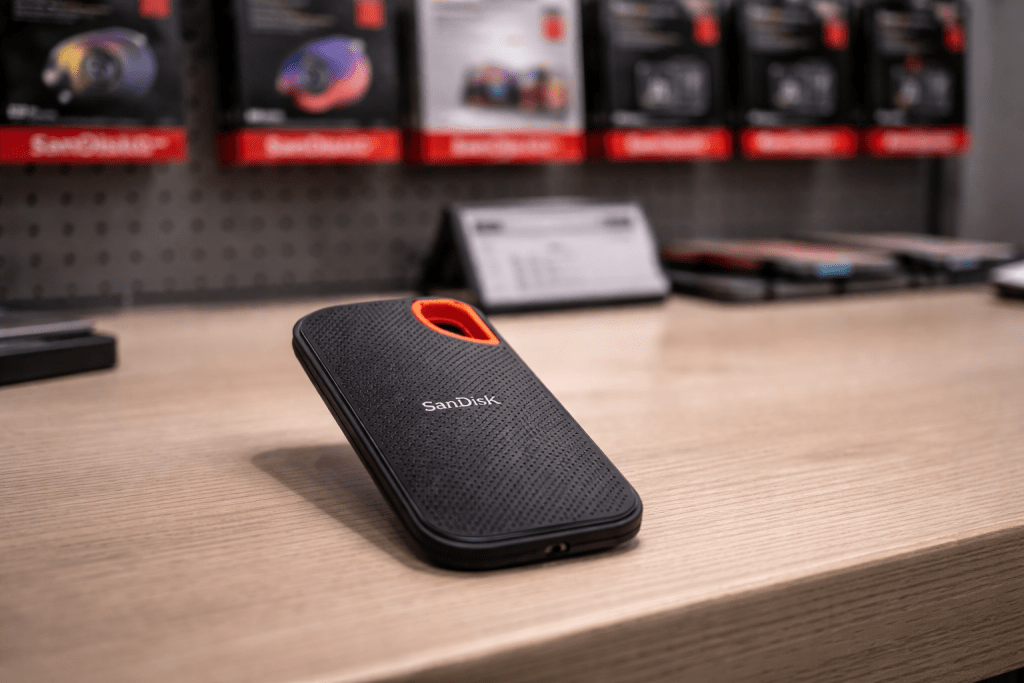
Shares of SanDisk continued their remarkable ascent on Thursday, as analysts pointed to sustained strength in memory demand and pricing as key drivers of further upside.
The stock rose about 7.17% to $836.86, extending what has already been one of the most extraordinary rallies in the market.
Over the past 12 months, SanDisk shares have surged 2,567%, significantly outperforming the broader market, with the S&P 500 gaining just 29% over the same period.
Memory boom fuels bullish outlook
Analysts remain optimistic that the memory cycle still has room to run.
Mark Newman of Bernstein raised his price target on SanDisk to $1,250 from $1,000, implying roughly 60% upside from recent levels.
Newman attributes this bullish stance to strong and sustained demand for memory, particularly in artificial intelligence applications, where storage and processing requirements are expanding rapidly.
“We think the market is significantly undervaluing earnings power and sustainability of this cycle,” Newman wrote. He rates the stock as Outperform.
Memory pricing trends further reinforce this view.
Analysts at UBS estimate that double data rate (DDR) memory prices rose an average 95% in the first quarter compared to the previous quarter, while NAND flash memory prices climbed 80%.
These sharp increases have supported earnings expectations across the sector.
SanDisk, which focuses on NAND flash-based products such as solid-state drives, is particularly well positioned to benefit from this surge, given the growing demand from AI data centers.
AI demand reshapes the memory cycle
The rally in memory stocks reflects a broader trend on Wall Street, where investors have increasingly favored “picks and shovels” companies—those supplying the hardware needed to power artificial intelligence.
Peers such as Micron Technology have also seen strong gains, with shares rising 473% over the past year.
Beyond near-term demand, analysts believe structural changes in how AI is deployed could sustain the cycle. As companies shift from training models to running them in real-world environments, the need for memory-intensive infrastructure continues to expand.
Newman also dismissed concerns surrounding a new compression algorithm developed by Google. The technology, known as TurboQuant, reportedly reduces “key value memory size” in AI models by at least six times, initially raising fears about reduced memory demand.
However, Newman argued those concerns were overstated.
“We are believers in Jevons paradox and that overall cheaper and more efficient compute will generally drive demand for more compute (and thus more memory and storage),” he said.
Analysts see further upside despite risks
Other analysts share a similarly constructive outlook. C.J. Muse at Cantor Fitzgerald raised his price target to $1,000 from $800 while maintaining an Overweight rating.
“Demand remains robust, and we see the supply/demand imbalance extending into likely mid-CY28 earliest,” he said.
Newman also outlined a more optimistic “blue-sky” scenario, suggesting the stock could reach as high as $3,000 if pricing conditions remain exceptionally strong. That scenario assumes a more sustained and elevated pricing peak for NAND memory.
Even under a more conservative base-case scenario, the outlook remains strong. Newman expects sequential price growth to peak at 55% in the March quarter before moderating, still supporting earnings above consensus estimates.
SanDisk is scheduled to report its March-quarter results on April 30, which could provide further clarity on whether the current momentum in pricing and demand can be sustained.
While the rally has been extraordinary, analysts broadly agree that the trajectory of memory prices—and by extension AI-driven demand—will be the key determinant of whether the stock can continue its historic run.
The post Sandisk’s epic rally: can memory boom push stock to $1,250? appeared first on Invezz

More Stories
Circle stock drops as analysts warn of margin squeeze ahead
CEO John Giamatteo sold BlackBerry stock: here’s why you shouldn’t
Nvidia stock jittery on Thursday as Amazon may ramp up competition